Changes in central vision can make everyday tasks, from reading a menu to recognizing a familiar face, more difficult. At Retina Health Center, patients can receive specialized macular degeneration evaluation and care at our Fort Myers and Naples locations. If you are looking for experienced care for macular degeneration in Fort Myers, early diagnosis is an important first step toward understanding the condition and determining the appropriate treatment or monitoring plan.
If you need support for macular degeneration in Naples, our team provides timely evaluation and guidance tailored to your needs. Our retina specialists evaluate both dry and wet forms of macular degeneration using advanced imaging and create individualized care plans that may include monitoring, nutritional guidance, injections, or other treatments to help preserve vision.
Retina Health Center: Comprehensive Macular Degeneration Treatment in Fort Myers & Naples
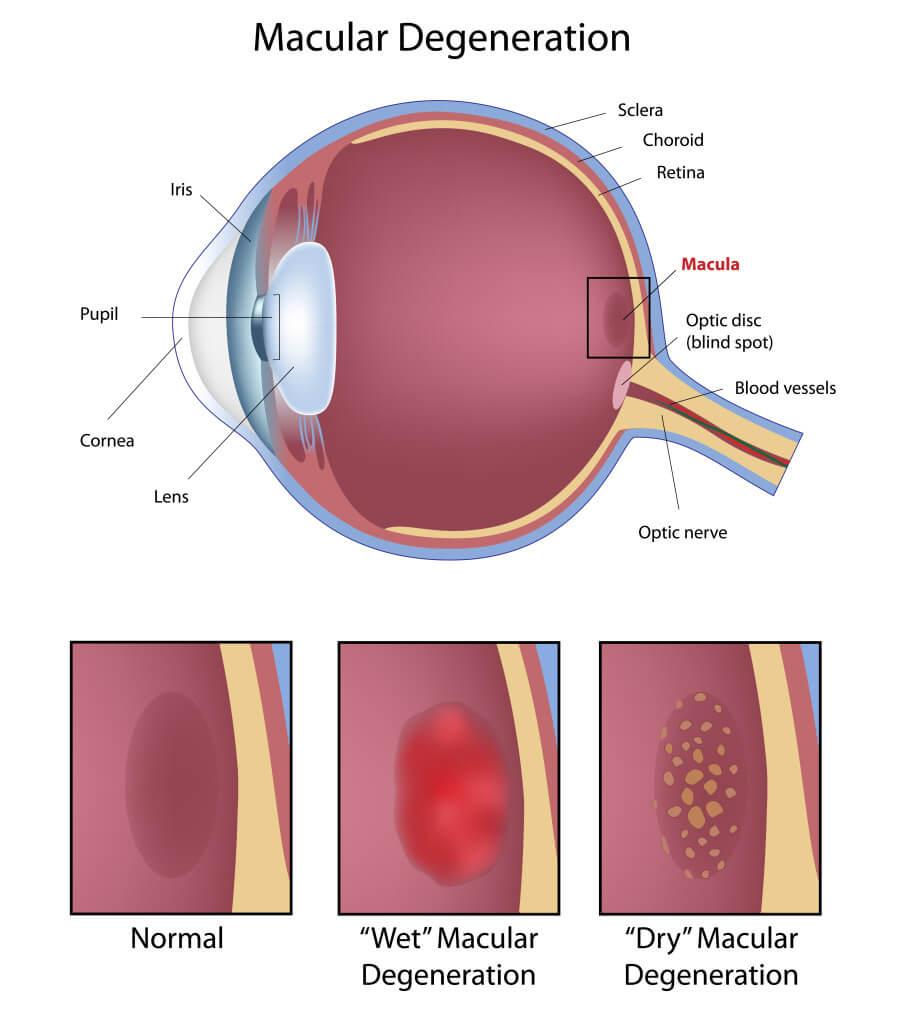
Macular degeneration is a common eye disorder that slowly damages a person’s central vision. It is currently the top cause for vision loss in people over age 55, but advances in treatment for macular degeneration offer hope for many patients. The macula is located near the center of the eye’s retina. It is part of the inside back layer of the eyeball and helps to convert light and images into our central vision. Activities such as reading, recognizing faces, and driving become difficult when the macula becomes damaged, which may reduce a person’s quality of life.
Macular degeneration becomes more prevalent. Fortunately, there is research underway to determine more effective ways to prevent this disease and develop improved options like the dry macular degeneration treatment and wet macular degeneration treatment available at our center. The physicians at the Retina Health Center follow new developments closely.
In fact, the Retina Health Center has founded the Macular Degeneration Research Center, located in Fort Myers, which focuses on research and new technologies to treat macular degeneration. The Macular Degeneration Research Center has been chosen to participate in several national studies on macular degeneration.
Both Dr. Alexander M. Eaton and Dr. Hussein Wafapoor have worked with researchers at other major academic centers to be investigators in ongoing FDA trials of new treatments for dry macular degeneration as well as wet macular degeneration. Please read on for additional information on macular degeneration, or contact us today if you would like to schedule an appointment.
Where is the macula and what is its role in your vision?
The eye works like a camera. Light entering the eye is focused by the cornea and the crystalline lens to form an image on the retina. The retina sends the image through the optic nerve to the brain.
The largest part of the retina is the peripheral retina, which provides your side vision. The macula is the retina’s central portion, which provides close-up vision needed for detailed activities such as reading fine print or threading a needle.
When cells within the macula become damaged, central vision may become blurred, distorted, or reduced. Because early AMD may cause few noticeable symptoms, routine retinal examinations can play an important role in identifying changes before significant vision loss occurs.
Understanding the role of the macula in your eye health is essential for early detection and intervention. A quick diagnosis and the right macular degeneration specialist near you can help prevent the progression of dry macular degeneration and wet macular degeneration.
What are the symptoms?
Most people who develop macular degeneration begin to notice problems with their eyesight after age 50. Typically, only one eye is affected initially, so you may not be immediately aware of the changes.
Common symptoms can include:
- Blurry words or text while reading
- Difficulty seeing fine details
- Reduced central vision
- Straight lines appearing bent or wavy
- Dark, blurry, or blank areas in the center of vision
- Colors appearing less vivid
- Objects appearing different in size between the eyes
- Increased difficulty seeing in low-light conditions
A sudden increase in distortion, central blurring, or straight lines appearing wavy should be evaluated promptly, as these changes can sometimes indicate progression to wet macular degeneration.

Three forms of macular degeneration:
Dry Macular Degeneration: Symptoms, Progression & Treatment Options
Dry macular degeneration accounts for nearly 85 percent of all forms of macular degeneration and is caused by the loss of cells in the retina and/or the buildup of deposits known as drusen. In some people, these spots on the retina lead to vision loss. Others may have dry macular degeneration for many years without any symptoms. Therefore, early detection and careful monitoring are crucial to maintaining good vision.
Early intervention and regular eye exams can help slow the progression of dry macular degeneration. Our macular degeneration specialists in Fort Myers and Naples are equipped with the latest diagnostic tools to ensure your condition is managed effectively.
Dry Macular Degeneration Treatment
The appropriate dry macular degeneration treatment depends on the stage of AMD and the changes visible during a retinal examination. Early-stage disease may primarily require monitoring through regular dilated examinations and retinal imaging so that progression can be identified as soon as possible.
For appropriate patients, a retina specialist may also discuss nutritional support such as AREDS2 supplements, along with lifestyle measures including avoiding smoking, maintaining cardiovascular health, staying physically active, and eating a balanced diet rich in vegetables and other nutrient-dense foods. Supplements are not appropriate for every patient, so they should be discussed with an eye doctor and medical provider first.
For patients researching Florida dry macular degeneration treatment, it is also important to know that treatment options continue to evolve. Certain patients with advanced dry AMD, including geographic atrophy, may now have additional treatment considerations. A retinal specialist can determine whether these newer approaches are appropriate based on retinal imaging, disease location, progression, medical history, and potential risks and benefits.
Patients seeking South Florida dry macular degeneration care at Retina Health Center can receive ongoing retinal monitoring in both Fort Myers and Naples, helping identify meaningful changes and determine whether the management plan needs to be adjusted over time.
Wet Macular Degeneration
Wet macular degeneration occurs when abnormal blood vessels grow under the retina and leak fluid, causing damage to the macula. This form of macular degeneration is more aggressive and can lead to severe vision loss if left untreated. Treatments such as injections and laser therapy are used to manage this condition.
Wet Macular Degeneration: Advanced Treatment Options
Wet macular degeneration occurs when abnormal blood vessels grow beneath or within the retina. These fragile vessels can leak fluid or blood into the macula, leading to swelling and rapid changes in central vision. Although it is less common than dry AMD, it often requires more urgent care.
The main goal of wet macular degeneration treatment is to control abnormal blood vessel growth, reduce leakage, and protect the macula from further damage. Treatment usually involves anti-VEGF eye injections, with schedules tailored to each patient based on retinal imaging and response, and may include other options like photodynamic therapy in select cases.
Pigment Epithelial Detachment
Another form of wet macular degeneration, known as pigment epithelial detachment (PED), involves the accumulation of fluid beneath the retina, contributing to vision impairment. Wet macular degeneration treatment in Fort Myers and Naples includes therapies specifically tailored for PED patients.
Treatment depends on the underlying cause and retinal findings. When PED is associated with neovascular or wet AMD, the physician may incorporate appropriate wet macular degeneration treatment into an individualized management plan.
How Can You Help Reduce the Risk or Progression of Macular Degeneration?
There is no single strategy that can guarantee prevention of macular degeneration, but several healthy habits may support retinal and overall eye health. Depending on the stage of AMD, your retina specialist may recommend a combination of monitoring, nutritional guidance, lifestyle changes, and treatment.
Helpful measures may include:
- Avoiding smoking
- Maintaining healthy blood pressure and cardiovascular health
- Exercising regularly
- Eating a balanced diet that includes leafy green vegetables and nutrient-rich foods
- Protecting the eyes from excessive ultraviolet exposure
- Attending scheduled retinal examinations
- Monitoring vision changes at home when instructed
- Discussing AREDS2 supplementation with your eye doctor when appropriate
Patients should not begin high-dose eye vitamins solely on their own. The appropriate formula depends on the stage of AMD, smoking history, medications, and other health considerations. Your eye doctor can determine whether nutritional supplementation should form part of your dry macular degeneration treatment plan.
Confirming the Macular Degeneration Diagnosis
If macular degeneration is suspected, specialized testing can help determine its type, stage, and severity.
Optical coherence tomography (OCT) provides detailed cross-sectional images of the retina and can help identify fluid, thinning, or structural changes in the macula. When wet AMD is suspected, retinal angiography may also be performed to evaluate abnormal blood vessels and leakage.
These findings help the retina specialist distinguish between dry and wet disease and determine whether monitoring, Florida dry macular degeneration treatment, or active therapy for wet AMD is appropriate.
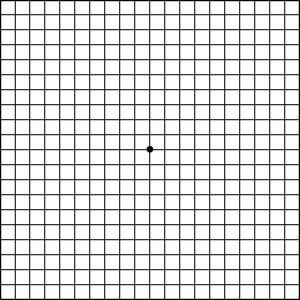
The Amsler Grid
The Amsler Grid Test is an effective means of alerting you to changes in your vision. While wearing your reading glasses, cover one eye and look directly at the center dot of the grid, which you can find to the right of this text. Keeping your eye focused firmly on the dot, be sure that all the lines are straight and all the squares are the same size. Do this for each eye. If any area on the grid becomes blurred, distorted, or otherwise abnormal, notify us immediately.
If lines suddenly appear distorted, missing, blurry, or wavy, contact your eye doctor promptly rather than waiting for your next scheduled appointment.
Macular Degeneration Treatment Options in Fort Myers & Naples
There are several options for treating wet macular degeneration, including injections such as lucentis, eylea, laser therapy, and surgery, with each offering proven results for patients seeking a cure for macular degeneration. Because we at the Retina Health Center have been actively involved in the research leading to the approval and adaptation of many of these medications and treatments, your physician has the experience to help you decide which of the treatment options is best for you.
At Retina Health Center, we are committed to staying at the forefront of treatment for macular degeneration. Whether it’s addressing early signs with specialized dry macular degeneration treatment or utilizing advanced therapies for wet macular degeneration treatment, our experienced team provides comprehensive care to protect your vision.
Our clinic in Fort Myers and Naples offers cutting-edge treatments for both wet macular degeneration and dry macular degeneration. We are committed to providing the best care tailored to each patient’s needs.
- Eye Injections -The most common treatment for macular degeneration involves injections of medication into the eye. While this may sound unpleasant, most patients feel little or no pain, thanks to anesthetics. Drs. Eaton and Wafapoor of Retina Health Center have also collaborated with researchers to invent a device specifically designed to improve patient safety and comfort during the administration of eye injections. The device, developed in 2012, incorporates a small-gauge needle that is covered by a thin protective sleeve, which is designed to protect the needle from contamination risks before and during the injection, such as aerosolized saliva droplets from speech or breathing, as well as from the eyelids or other external contaminants. The most effective medications available are Lucentis and Avastin, which can be used for the treatment of macular degeneration. Lucentis has been found to significantly improve vision in up to 40 percent of people with wet macular degeneration.
- Laser Treatment – When abnormal blood vessel growth is discovered early, laser treatment may be used to prevent further bleeding and deter future growth, helping to preserve vision. By applying laser light to the vessels involved in wet macular degeneration treatment, bleeding can be controlled, and vision can be preserved effectively.
- Surgical treatment – The use of surgery is becoming less frequent due to the development and availability of medications like Lucentis, Eylea, and Avastin.
If you are searching for the best treatment for macular degeneration, our dedicated physicians and cutting-edge research aim to deliver personalized care options tailored to your unique condition.
Patients being treated for other retinal problems can also learn more about Retina Health Center’s retinal detachment treatment, diabetic retinopathy treatment, and macular hole treatment services. These internal resources provide additional information about conditions that can affect the retina and central vision.
Why Choose Retina Health Center for Macular Degeneration Treatment?
Macular degeneration requires more than identifying that vision has changed—it requires understanding exactly what is happening within the retina. Retina Health Center provides specialized retinal evaluation, advanced diagnostic imaging, individualized treatment planning, and ongoing disease monitoring at its Fort Myers and Naples offices.
For people searching for treatment options for macular degeneration in Fort Myers or macular degeneration in Naples, having access to a retina-focused practice allows diagnosis, imaging, treatment, and follow-up to remain closely coordinated. Our physicians also remain actively involved in retinal research and evolving approaches to AMD management.
Patients seeking South Florida dry macular degeneration evaluation can schedule care at the location that is most convenient for them while receiving a treatment plan based on their specific retinal findings rather than a generalized approach.
FAQs
What is macular degeneration, and how does it affect vision?
Macular degeneration is a condition that damages the macula, a part of the retina responsible for central vision. It affects activities like reading and driving. Early diagnosis and treatment for macular degeneration are crucial to preserving vision. Contact us for personalized care.
Can macular degeneration be prevented?
While there’s no definitive cure for macular degeneration, lifestyle changes such as a healthy diet, exercise, and avoiding smoking can help reduce its risk. Regular eye check-ups can also aid in early detection. Learn more about prevention from our macular degeneration specialists.
What treatments are available for dry macular degeneration?
Dry macular degeneration treatment depends on the stage and severity of the condition. Management may include regular retinal examinations, OCT imaging, lifestyle recommendations, and AREDS2 nutritional supplementation for appropriate patients. For advanced forms such as geographic atrophy, newer treatment options may be considered after a retinal specialist evaluates the disease’s location and progression.
How do I know if I need wet macular degeneration treatment?
Wet macular degeneration is more aggressive and requires treatments like injections or laser therapy. If you’re experiencing sudden vision changes, it’s essential to schedule an appointment with our macular degeneration specialist in Fort Myers to confirm the diagnosis.
Where can I receive macular degeneration treatment in Fort Myers?
Patients looking for macular degeneration treatment Fort Myers services can visit Retina Health Center’s Fort Myers office for retinal evaluation, diagnostic imaging, monitoring, and treatment planning for dry and wet AMD. The appropriate care plan is determined after the retina specialist identifies the type, stage, and activity of the disease.
How is wet macular degeneration treated?
Wet macular degeneration treatment most commonly involves anti-VEGF injections that help control abnormal blood vessels and fluid leakage in the retina. Patients usually require ongoing monitoring because repeat injections may be necessary. The frequency of treatment depends on retinal imaging, vision changes, disease activity, and how the individual responds to therapy.
Is macular degeneration treatment available in Naples?
Yes. Patients seeking macular degeneration treatment Naples services can receive specialized retinal care at Retina Health Center’s Naples location. Care may range from ongoing monitoring of dry AMD to retinal injections and follow-up management for wet AMD, depending on the diagnosis and individual retinal findings.